You have no items in your wish list.
Pedelec legal framework & requirements
Pedelec legal framework & requirements – understand what matters
If you convert a bicycle with electric pedal assistance, it’s not enough that it simply “works”. What really matters is that your setup can be clearly classified — especially if you want to ride it in public spaces and on public roads. This is exactly where DIY builds often raise questions: Which requirements apply? What defines a pedelec setup? And how do you avoid configurations that can quickly make your bike look like a vehicle that may require registration and insurance?
In general, a Pedelec 25 / EPAC is treated like a bicycle in everyday use when it matches the typical criteria (e.g. 250 W continuous rated power, pedal assistance up to 25 km/h, assistance only while pedalling). In addition, the bicycle still needs to meet the applicable road equipment requirements (e.g. lights, brakes, reflectors) — regardless of which drive system is installed.
Legal consequences if your build is no longer classifiable as a pedelec
If a conversion falls outside the pedelec criteria (for example due to unclear/unsuitable configuration, “tuning”, or a setup that shifts the character toward a motor vehicle category), it can have real legal and practical consequences:
-
Different vehicle class: What was treated as a bicycle/pedelec may be classified as a motor vehicle (e.g. depending on the setup as a moped/S-pedelec type category) — with different traffic rules.
-
Additional obligations may apply: Depending on classification, requirements like an insurance plate, possibly type approval/operating permit, helmet requirement, driving licence, and restrictions on cycle path use can become relevant.
-
Consequences in public traffic: Riding a vehicle that requires such obligations without meeting them can lead to fines and, depending on the case, further consequences (including issues related to insurance coverage).
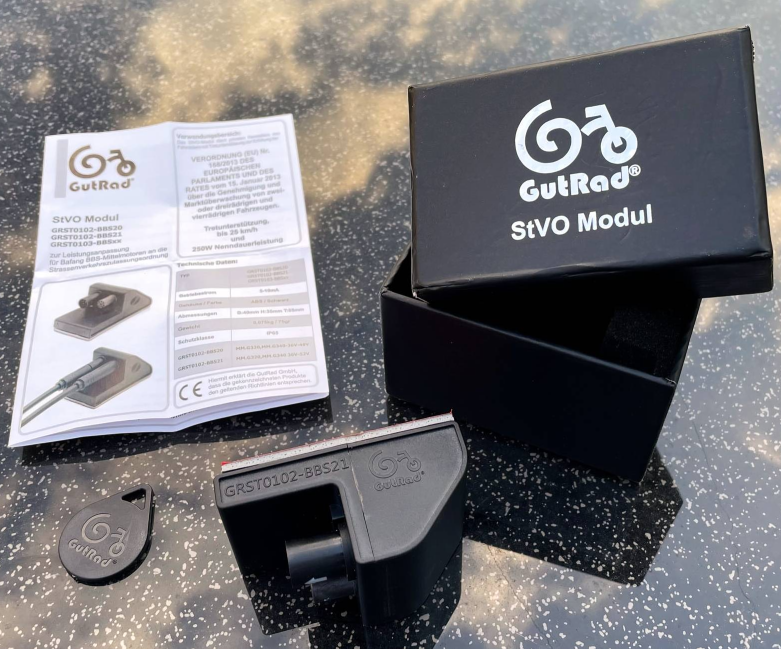
Our position at GutRad: For conversions, it’s not only about limiting values — it’s about technical traceability. That’s why we offer the GutRad StVO Module: a CE-marked hardware solution designed to align Bafang BBS drives toward a pedelec configuration (250 W / 25 km/h / throttle off). The key advantage: the module is built as intelligent hardware and can automatically adapt to different Bafang BBS controller variants, so your setup doesn’t depend on fragile DIY programming.
This creates a clearly defined configuration whose as-built condition is much easier to describe and verify — even when technicians, inspectors or expert assessors need to review the setup. If you have questions about classification, requirements, or your specific build: contact us — we provide clarity before you buy and support after your conversion.
Here is a structured overview of the recommended steps for private owners of bicycle conversions with Bafang BBS as non-registered pedelec.
Understanding the Legal Situation and Requirements:
The Road Traffic Act (StVG) § 1 Approval regulates the provisions for pedelecs (maximum 250 W nominal continuous power, assistance only up to 25 km/h, and exclusively pedal assistance).
Familiarize yourself with the other relevant regulations of the Road Traffic Licensing Regulations (StVZO), the Road Traffic Regulations (StVO), and the EU directives that govern the private retrofit of a bicycle with electric pedal assistance (Pedelec 25).
Additional important information is provided at the end of this article.
Installation of a Suitable Module:
Use the unique intelligent module from GutRad, which reliably limits the motor power of the Bafang BBS DIY motor group to comply with the prescribed guidelines and certifies these values.
Ensure that the module is properly integrated into the overall system and that the existing parameter settings (wheel diameter, parameters, wiring, etc.) are in compliance with regulations.
Technical Inspection and Measurements:
Conduct tests under real conditions to ensure that the power parameters are actually being met.
Measure power and speed to obtain objective, physical evidence, e.g., via the display, a shunt, or a GPS app.
Documentation:
Create a detailed documentation of the entire conversion process (Machinery Directive).
Collect all relevant documents for the components used, such as purchase receipts and any available installation instructions. These documents can be helpful in case of an official inspection.
Consider Safety Aspects:
Although no formal system certification is required for personal use, an independent expert inspection (e.g., by a recognized testing service provider) can verify the overall system's safety.
Ensure that other safety-relevant components, such as the frame and brakes, are not compromised by the conversion.
Maintain Private Use:
Use the converted bicycle exclusively for personal use.
Keep in mind that commercial distribution or professional use requires additional testing and approval requirements.
Ongoing Monitoring:
Regularly check whether all systems function as intended and that performance parameters remain consistent.
Stay informed about any changes in legal regulations.
These steps will help you carry out the conversion in compliance with the legal framework for registration exemption—based on adherence to and verifiable measurement of the specified physical performance parameters.
We are, of course, happy to assist our customers with advice and support and look forward to every well-executed and safe conversion!
-
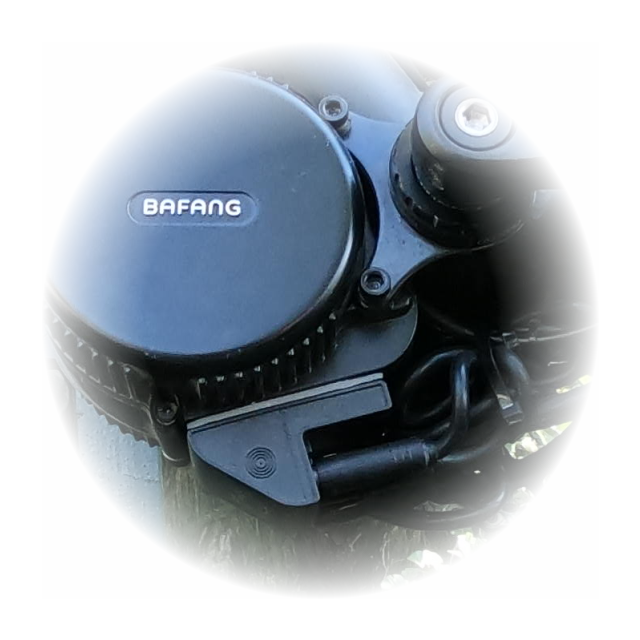 Modul 36V /48V for Bafang BBS DIY Vers.1.0 (limited Edition)Only €129.00 Incl. VAT excl. Shipping Cost